early in the story
Denied Entry
On a summer morning, sixteen-year-old [Lukas](entity:character-recall-character-lukas-f2b1167442c4) is turned away from school because he has forgotten his student ID. The guard refuses to make an exception, and Lukas, already worried about repeating ninth grade because of his absences, gives up and decides to skip class.
that morning
Meeting Gino and Julius
[Lukas](entity:character-recall-character-lukas-f2b1167442c4) meets [Gino](entity:character-recall-character-gino-ad3400000099) near the subway station and learns that [Julius](entity:character-recall-character-julius-2b9b6a5d3dd6) is joining them. The three consider where to spend the day, with Julius filling the time with stories about neighborhood fights and the others weighing the risks of being seen skipping school.
later that morning
The Park Confrontation
The friends head through a park to buy cannabis from [Cem](entity:character-recall-character-cem-af3a8519de2f), though [Lukas](entity:character-recall-character-lukas-f2b1167442c4) would rather avoid the dealers gathered there. When a dealer offers them drugs, [Julius](entity:character-recall-character-julius-2b9b6a5d3dd6) answers back instead of walking on, then insults the people they might buy from, provoking the group.
minutes later
Lukas Is Beaten
[Djamel](entity:character-recall-character-djamel-6d1b5ef9ae0c) confronts [Lukas](entity:character-recall-character-lukas-f2b1167442c4) after [Julius](entity:character-recall-character-julius-2b9b6a5d3dd6) tries to smooth things over by claiming an old school connection. Lukas stumbles through an apology, but Djamel hits him, and others join in: one kicks him while another records the assault.
immediately after the beating
The Friends Leave the Park
Once the attackers let them go, [Lukas](entity:character-recall-character-lukas-f2b1167442c4) angrily challenges [Gino](entity:character-recall-character-gino-ad3400000099) and [Julius](entity:character-recall-character-julius-2b9b6a5d3dd6) for standing by. He then admits to himself that fear might have frozen him too, and decides that fighting back could have brought a worse reprisal.
shortly afterward
Cem Calls for Retaliation
At [Cem](entity:character-recall-character-cem-af3a8519de2f)’s meeting spot, [Julius](entity:character-recall-character-julius-2b9b6a5d3dd6) tells him that the group who hurt [Lukas](entity:character-recall-character-lukas-f2b1167442c4) insulted Cem as well. Cem takes the story as a personal challenge, announces that they will confront the attackers, and gives Lukas a telescopic baton, telling him to strike first.
minutes later
The Park Gang Fight
As the two groups face one another, [Lukas](entity:character-recall-character-lukas-f2b1167442c4) freezes and drops the baton. [Cem](entity:character-recall-character-cem-af3a8519de2f) attacks [Djamel](entity:character-recall-character-djamel-6d1b5ef9ae0c), and the confrontation erupts into a sprawling fight involving both groups and Cem’s arriving brothers.
during the fight
Lukas Escapes by Subway
[Gino](entity:character-recall-character-gino-ad3400000099) runs first, and [Lukas](entity:character-recall-character-lukas-f2b1167442c4) follows, leaving [Julius](entity:character-recall-character-julius-2b9b6a5d3dd6) behind in the chaos. Lukas boards a subway train with a bloodied face and tries to put distance between himself and the park.
minutes after Lukas flees
The Pursuers Miss the Train
At the next station, [Lukas](entity:character-recall-character-lukas-f2b1167442c4) hears a group rushing down the stairs and fears the attackers have found him. They reach the platform just as the doors close; Lukas sees [Djamel](entity:character-recall-character-djamel-6d1b5ef9ae0c) being carried, badly injured, as the train pulls away.
that afternoon
Gino Visits Lukas
Back at home, [Lukas](entity:character-recall-character-lukas-f2b1167442c4) washes the blood from his face and worries that his father, [Matthias](entity:character-recall-character-matthias-e7b55a2fdd44), will see his injuries. [Gino](entity:character-recall-character-gino-ad3400000099) later arrives, but when his father calls, he abruptly leaves, adding to Lukas’s concern about Gino’s troubled home life.
the next school day
A Chaotic School Day
[Lukas](entity:character-recall-character-lukas-f2b1167442c4) returns to a classroom where a hapless substitute cannot control the students, who hide the class register, throw chalk, and turn the lesson into a spectacle. The disorder gives Lukas a temporary distraction from the violence and from his unanswered questions about [Gino](entity:character-recall-character-gino-ad3400000099) and [Julius](entity:character-recall-character-julius-2b9b6a5d3dd6).
that school day
Sanchez Arrives
The principal introduces [Sanchez](entity:character-recall-character-sanchez-e99b9a63de15), a new student who has moved from Kaulsdorf-Nord with his mother. Sanchez jokes his way through the introduction, then later appears at [Lukas](entity:character-recall-character-lukas-f2b1167442c4)’s home asking for rolling papers, beginning an unexpected friendship between the neighbors.
the following weeks
A New Friendship Takes Shape
[Sanchez](entity:character-recall-character-sanchez-e99b9a63de15) quickly adapts to life in [Gropiusstadt](entity:location-recall-location-gropiusstadt-580b3da3d1c1), trading jokes and cigarettes with [Lukas](entity:character-recall-character-lukas-f2b1167442c4) and [Gino](entity:character-recall-character-gino-ad3400000099). When [Julius](entity:character-recall-character-julius-2b9b6a5d3dd6) invites them to a party, Sanchez pushes for them to go despite Lukas’s prediction that the gathering will end in violence.
the evening of the party
Sanchez Steals the Drinks
At Aldi, [Sanchez](entity:character-recall-character-sanchez-e99b9a63de15) distracts the group while secretly concealing bottles in his sleeves. He gets away with the theft, and the friends carry the alcohol off to drink before heading to [Julius](entity:character-recall-character-julius-2b9b6a5d3dd6)’s gathering.
that evening
Marco Warns Lukas
At home, [Lukas](entity:character-recall-character-lukas-f2b1167442c4) is surprised by a visit from his older brother, [Marco](entity:character-recall-character-marco-8f19c29480ba), who has heard about the park fight. Marco warns him not to confuse street pride with safety: if someone has a knife, Lukas should run or give up his phone rather than risk his life.
during Marco’s visit
Matthias Gets a Job
[Matthias](entity:character-recall-character-matthias-e7b55a2fdd44) shares good news: he has secured a permanent university caretaker job with stable hours and benefits. The family celebrates, briefly setting ordinary hopes for the future against the insecurity that dominates [Lukas](entity:character-recall-character-lukas-f2b1167442c4)’s life outside the apartment.
later that evening
The Party Begins
[Lukas](entity:character-recall-character-lukas-f2b1167442c4) joins [Sanchez](entity:character-recall-character-sanchez-e99b9a63de15), [Gino](entity:character-recall-character-gino-ad3400000099), and [Julius](entity:character-recall-character-julius-2b9b6a5d3dd6) for a night of drinking and smoking. The friends trade music and jokes, and their excitement rises as they travel toward the party near Grenzallee.
near midnight
Julius Attacks the Taxi Driver
After the party is shut down by police, the group takes a taxi home. [Julius](entity:character-recall-character-julius-2b9b6a5d3dd6) suddenly sprays the driver with tear gas, kicks the car’s side mirror, and bolts, turning a ride home into another reckless crime.
before dawn
The Rooftop Scheme
[Lukas](entity:character-recall-character-lukas-f2b1167442c4) and [Sanchez](entity:character-recall-character-sanchez-e99b9a63de15) spend the remaining hours on a rooftop, drunk and high, talking about money and escape from their limited prospects. Sanchez proposes finding a way to earn real cash, planting the idea that will soon become the school-computer theft.
the following school week
The School Announces New Computers
The principal gathers the school and announces that the [Berlin](entity:location-recall-location-berlin-54cb4a75d0f6) education authority will provide fifty new computers. The students react with little enthusiasm, but [Sanchez](entity:character-recall-character-sanchez-e99b9a63de15) hears an opportunity in the news.
after the announcement
Four Plan the Theft
[Sanchez](entity:character-recall-character-sanchez-e99b9a63de15) proposes breaking into the school and stealing the computers; [Julius](entity:character-recall-character-julius-2b9b6a5d3dd6) immediately supports the plan and reveals he has lock-picking tools. [Lukas](entity:character-recall-character-lukas-f2b1167442c4) objects, but [Gino](entity:character-recall-character-gino-ad3400000099)’s anger at being poor and his fear of his abusive father push him toward joining, and Lukas finally gives in as well.
the night of the burglary
Julius Brings a Gun
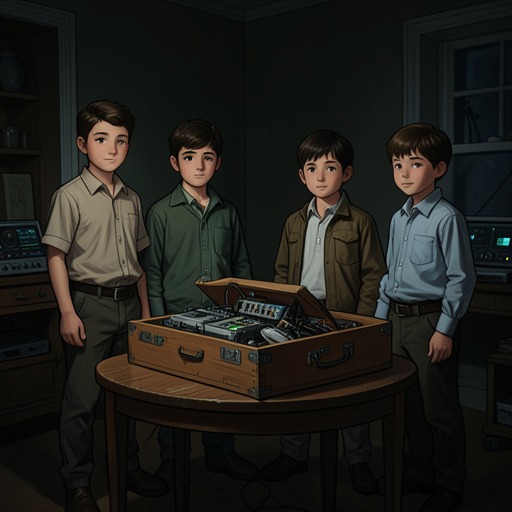
The three boys meet near the school, with [Gino](entity:character-recall-character-gino-ad3400000099) unable to join because of his father’s restrictions. [Julius](entity:character-recall-character-julius-2b9b6a5d3dd6) reveals that he has brought a blank-firing gun, alarming [Sanchez](entity:character-recall-character-sanchez-e99b9a63de15) and [Lukas](entity:character-recall-character-lukas-f2b1167442c4), but refuses to hand it over before they move ahead.
later that night
Breaking into the School
[Sanchez](entity:character-recall-character-sanchez-e99b9a63de15) uses a stolen key ring to open the gate and a side entrance. Inside, [Lukas](entity:character-recall-character-lukas-f2b1167442c4)’s flashlight fails, and the boys rely on [Julius](entity:character-recall-character-julius-2b9b6a5d3dd6)’s phone to find their way through the dark school.
during the burglary
Finding the Computers
The boys reach the basement storeroom and initially think the computers are missing. [Julius](entity:character-recall-character-julius-2b9b6a5d3dd6) eventually spots the new equipment stacked high on shelving, and the three begin carrying computers and monitors down with the help of a small step ladder.
shortly after the theft
The Escape Route Goes Wrong
The boys move the stolen equipment through a classroom window and discover that the high fence makes their planned exit difficult. They improvise a human ladder, then use a shopping cart to carry the computers away; one computer is damaged and [Julius](entity:character-recall-character-julius-2b9b6a5d3dd6) hurls it against a wall.
before dawn
The Blank Gun Scatters Bystanders
As the group pushes the loaded cart across a busy road, several men shout at them and throw bottles. [Julius](entity:character-recall-character-julius-2b9b6a5d3dd6) fires his blank-firing gun, sending the men running and allowing the boys to escape with the remaining computers.
the next school day
Police Brief the School
Police officers and [Herr Schiezeth](entity:character-recall-character-herr-schiezeth-0b1d5d78636b) tell students that the school has been burgled and that computers worth thousands of euros were taken in a shopping cart. Witnesses also reported gunshots near the route, and the principal promises that the culprits will be found.
later that day
Lukas Leaves After Arguing with Matthias
[Matthias](entity:character-recall-character-matthias-e7b55a2fdd44) questions [Lukas](entity:character-recall-character-lukas-f2b1167442c4) about the burglary, while Lukas insists he knows nothing and complains that daily violence in the neighborhood draws less attention than stolen public property. The argument escalates over Matthias’s dismissive view of local danger, and he orders Lukas out of the apartment.
that afternoon
Marco Warns the Computers Are Traceable
[Marco](entity:character-recall-character-marco-8f19c29480ba) calls after hearing about the burglary and explains that the computers may be registered and difficult to sell. [Lukas](entity:character-recall-character-lukas-f2b1167442c4) hides his involvement, but the warning deepens his fear that the stolen goods will lead police back to the group.
that evening
The Boys Delay Disposing of the Goods
[Lukas](entity:character-recall-character-lukas-f2b1167442c4) tells [Sanchez](entity:character-recall-character-sanchez-e99b9a63de15) and [Julius](entity:character-recall-character-julius-2b9b6a5d3dd6) that the police know the route, the number of burglars, and the gunfire, and that news of the crime is spreading. Although he urges them to dump the remaining computers, they insist on waiting and trying to sell them; [Gino](entity:character-recall-character-gino-ad3400000099)’s father passes nearby, drunk, and Julius insults him.
the following day
First Shop Rejects the Computers
The boys carry computers in sports bags from shop to shop, but prospective buyers refuse them. At one store, the owner recognizes the equipment as likely stolen and summons others, forcing [Lukas](entity:character-recall-character-lukas-f2b1167442c4), [Julius](entity:character-recall-character-julius-2b9b6a5d3dd6), and [Sanchez](entity:character-recall-character-sanchez-e99b9a63de15) to flee in different directions.
later that day
Three Computers Sell for 800 Euros
At another secondhand shop, the owner confronts the boys with a newspaper story about the school burglary. Despite the obvious risk, the men offer eight hundred euros for three computers and monitors, and the boys accept, dividing the money into four equal shares, including [Gino](entity:character-recall-character-gino-ad3400000099)’s.
after the sale
Lukas Meets Giovanna Ebert
At a supermarket, [Lukas](entity:character-recall-character-lukas-f2b1167442c4) encounters [Gino](entity:character-recall-character-gino-ad3400000099)’s mother, [Giovanna Ebert](entity:character-recall-character-giovanna-ebert-c01b7005da42), who looks exhausted and worries about her family. She tells him that [Julius](entity:character-recall-character-julius-2b9b6a5d3dd6) has been visiting Gino and helping care for his ill brother, offering a glimpse of the friends’ loyalty amid the family’s hardship.
that evening
Karin Asks for Help
[Karin](entity:character-recall-character-karin-12e1889aef3d) tells [Lukas](entity:character-recall-character-lukas-f2b1167442c4) that her son Fabian has been threatened and robbed near the school route, and asks how he can stay safe. Lukas advises him to take a longer route rather than confront the attackers, recognizing that avoiding danger may be the only realistic option.
the next morning
The Remaining Computers Move
[Julius](entity:character-recall-character-julius-2b9b6a5d3dd6) says his brother has discovered the computers and demands that the group remove them from his room. [Lukas](entity:character-recall-character-lukas-f2b1167442c4) again urges them to abandon the goods, but [Sanchez](entity:character-recall-character-sanchez-e99b9a63de15) proposes storing them at his home, and the others agree to keep searching for a buyer.
that day
Taner Spreads the Rumor
[Momo](entity:character-recall-character-momo-d421f1d5958c) calls [Lukas](entity:character-recall-character-lukas-f2b1167442c4) with news that [Taner](entity:character-recall-character-taner-b39329837311) has told students he saw Lukas trying to sell computers at his uncle’s shop. The rumor threatens to turn suspicion into identification, but [Sanchez](entity:character-recall-character-sanchez-e99b9a63de15) persuades Lukas to wait one more day before destroying the remaining evidence.
the next morning
The School Turns Against Lukas
[Lukas](entity:character-recall-character-lukas-f2b1167442c4) returns to school with [Sanchez](entity:character-recall-character-sanchez-e99b9a63de15) and finds students whispering, pointing, and calling him names. Police remain on the premises, and [Herr Reinicke](entity:character-recall-character-herr-reinicke-113c676135ad) singles Lukas out for a private conversation, making the risk of exposure feel immediate.
during the first school period
Reinicke Tries to Recruit Lukas
In private, [Herr Reinicke](entity:character-recall-character-herr-reinicke-113c676135ad) makes racist assumptions about the students and asks [Lukas](entity:character-recall-character-lukas-f2b1167442c4) to inform on his classmates. Lukas realizes that the teacher’s prejudice may make him dismiss evidence from students he considers outsiders, even as he is appalled by the injustice of that bias.
shortly after the meeting
Marco Arranges a Buyer
[Lukas](entity:character-recall-character-lukas-f2b1167442c4) confesses the burglary to [Marco](entity:character-recall-character-marco-8f19c29480ba), who is furious but tells him not to admit anything or betray his friends. Marco quickly finds a buyer for the remaining computers in [Moabit](entity:location-recall-location-moabit-8204b64d882d) and gives Lukas instructions to meet the contact at [Beusselstraße](entity:location-recall-location-beusselstra-e-c22b465b6249).
later that morning
Sanchez Reappears
After leaving [Lukas](entity:character-recall-character-lukas-f2b1167442c4) alone to meet a girl, [Sanchez](entity:character-recall-character-sanchez-e99b9a63de15) reappears and explains why he missed the meeting with [Herr Reinicke](entity:character-recall-character-herr-reinicke-113c676135ad). Lukas is relieved but angry that his friend abandoned him while he faced the teacher’s questions alone.
that afternoon
Sanchez’s Mother Welcomes Lukas
[Lukas](entity:character-recall-character-lukas-f2b1167442c4) eats at [Sanchez](entity:character-recall-character-sanchez-e99b9a63de15)’s home and meets his mother, Gabi, whose warmth and stories about racism in Hellersdorf reveal another side of the neighborhood’s social history. Sanchez then gives Lukas a haircut, and they prepare for the late-night sale arranged by [Marco](entity:character-recall-character-marco-8f19c29480ba).
that night
The Sale Becomes a Robbery
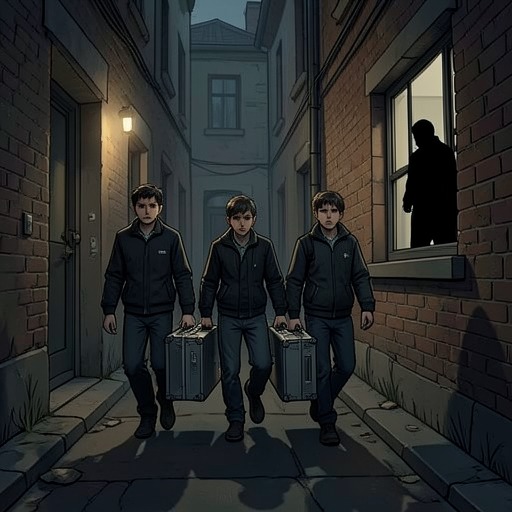
[Lukas](entity:character-recall-character-lukas-f2b1167442c4), [Julius](entity:character-recall-character-julius-2b9b6a5d3dd6), and [Sanchez](entity:character-recall-character-sanchez-e99b9a63de15) carry the remaining computers to [Beusselstraße](entity:location-recall-location-beusselstra-e-c22b465b6249), expecting to meet [Marco](entity:character-recall-character-marco-8f19c29480ba)’s contact. A man they mistake for the buyer takes the bags and drives away with them, leaving the boys robbed and the final evidence of the burglary gone.
immediately after the robbery
Marco Promises to Investigate
[Lukas](entity:character-recall-character-lukas-f2b1167442c4) calls [Marco](entity:character-recall-character-marco-8f19c29480ba), who is furious that the boys handed over the bags without confirming the buyer’s identity. Lukas begs him not to retaliate, but Marco says he will make calls to find out who robbed them.
later that night
News of Gino’s Attack
While the friends ride the train, a call from [Giovanna Ebert](entity:character-recall-character-giovanna-ebert-c01b7005da42) reveals that [Gino](entity:character-recall-character-gino-ad3400000099) has struck his father, [Henry Ebert](entity:character-recall-character-henry-ebert-9ea4dae1847d), with a glass bottle and run away with a badly cut hand. [Julius](entity:character-recall-character-julius-2b9b6a5d3dd6) admits he supplied Gino with [Tilidin](entity:object-recall-object-tilidin-1acaa6e65090) and encouraged him to use it to overcome his fear and resist the abuse at home.
later that night
The Friends Search for Gino
The three friends get off the train in [Neukölln](entity:location-recall-location-neuk-lln-e7706150a871) and begin searching the neighborhood for [Gino](entity:character-recall-character-gino-ad3400000099), whose phone is switched off. They have little idea where he might go, and their search is driven by fear that his injuries and the family violence could have left him in danger.
during the search
Julius Finds Denise with Cem
The friends encounter [Cem](entity:character-recall-character-cem-af3a8519de2f) walking with Denise, the girl he has been trying to find. [Julius](entity:character-recall-character-julius-2b9b6a5d3dd6) suddenly recognizes her as his own girlfriend and accuses her of deceiving both men, then slaps her before Cem turns on him.
moments later
The Fight Is Stopped
[Cem](entity:character-recall-character-cem-af3a8519de2f) repeatedly punches and kicks [Julius](entity:character-recall-character-julius-2b9b6a5d3dd6), while [Sanchez](entity:character-recall-character-sanchez-e99b9a63de15) and [Lukas](entity:character-recall-character-lukas-f2b1167442c4) intervene to pull him away. Once they restrain him, Julius explains that Denise had been seeing him too; Cem lets the group leave, warning that their connection through their brothers spared them a worse outcome.
near the end
Gino Is Found and Hospitalized
A call to [Lukas](entity:character-recall-character-lukas-f2b1167442c4)’s phone brings news that someone found [Gino](entity:character-recall-character-gino-ad3400000099) unconscious at a bus stop on Fritz-Erler-Allee and called an ambulance. The friends head to [Klinikum Neukölln](entity:location-recall-location-klinikum-neuk-lln-838a2c8d411d), where staff confirm that Gino is there and his mother has arrived.